Saturday, 8 February 2014

A VERY NICE SPOT

Ahead of us today was a 260km drive south through the Southern Alps to Wanaka in the Southern Lakes.


This section of State Highway 6 is known as the Haast Highway after the german explorer who opened up the route.  It tracks the path of the Haast River, climbs over the Haast Pass and then follows the Makarora River to reach the shore of Lake Wanaka.  The Haast Highway was the last of the great New Zealand highways to be built and it was only completed in 1964.  We were informed that it would be a real scenic treat.

We left Glacier Country just as a cool morning mist was lifting so we could glimpse the stunning peaks of Mt Cook and Mt Tasman silhouetted against deep blue sky for the last time.  After numerous single track crossings of rivers and creeks, we climbed the hills above Lake Moeraki to reach the Knights Point lookout on the cliffs high above the Tasman Sea.

Knights Point Lookout

The lookout is clearly popular with coach tours, and the ever eager photo hunters were torn between the beautiful sea views and the small group of classic and vintage Jaguars that had pulled in to regroup their tour.

We crossed the Haast River on the longest single track bridge in New Zealand. Fortunately traffic was light as our direction had to give way to oncoming vehicles.  A little further on we found a very nice spot on the banks of the Haast River for a scenic coffee break.

Haast River

Coffee Break at Haast River

On reaching Haast Pass, there were civil works in progress to stabilise the sheer rock face above the road as there had been a recent major rock fall.  The 'stop/go' man had placed a cone in the road and retreated to his shelter so we knew it could be a long wait.

Road Closed at Haast Pass
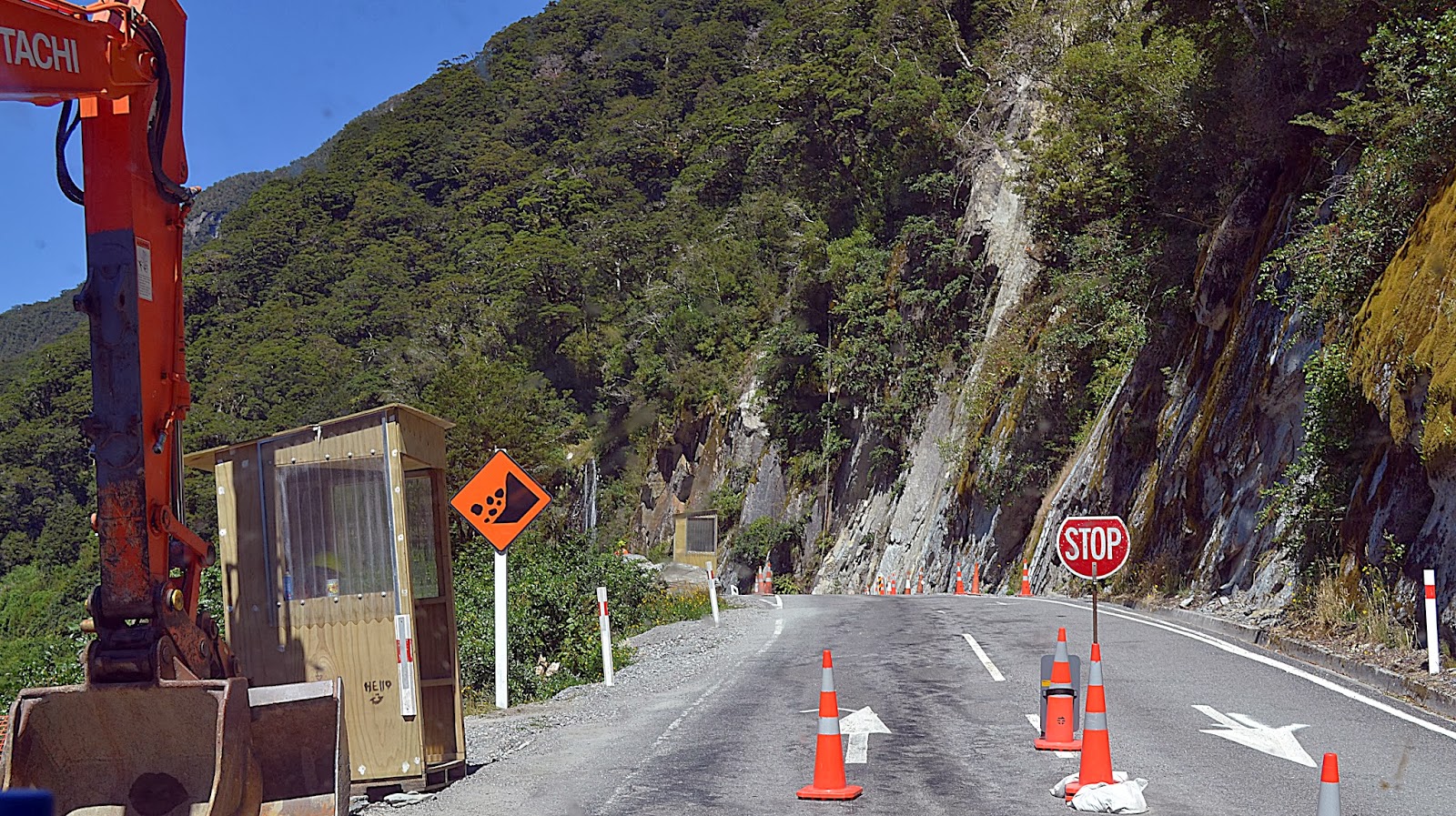
Eventually the road was opened and we were soon through the pass tracking the Makarora River towards our lunch stop at the Blue Pools Scenic Reserve.  A short walk from the road through forest brought us to a delightful haven where the pure glacial waters were indeed blue; a very nice spot.

Blue Pools Scenic Reserve

Back on the road, we soon met our first breathtaking views of Lake Hawea and then Lake Wanaka.

Lake Hawea

Lake Wanaka

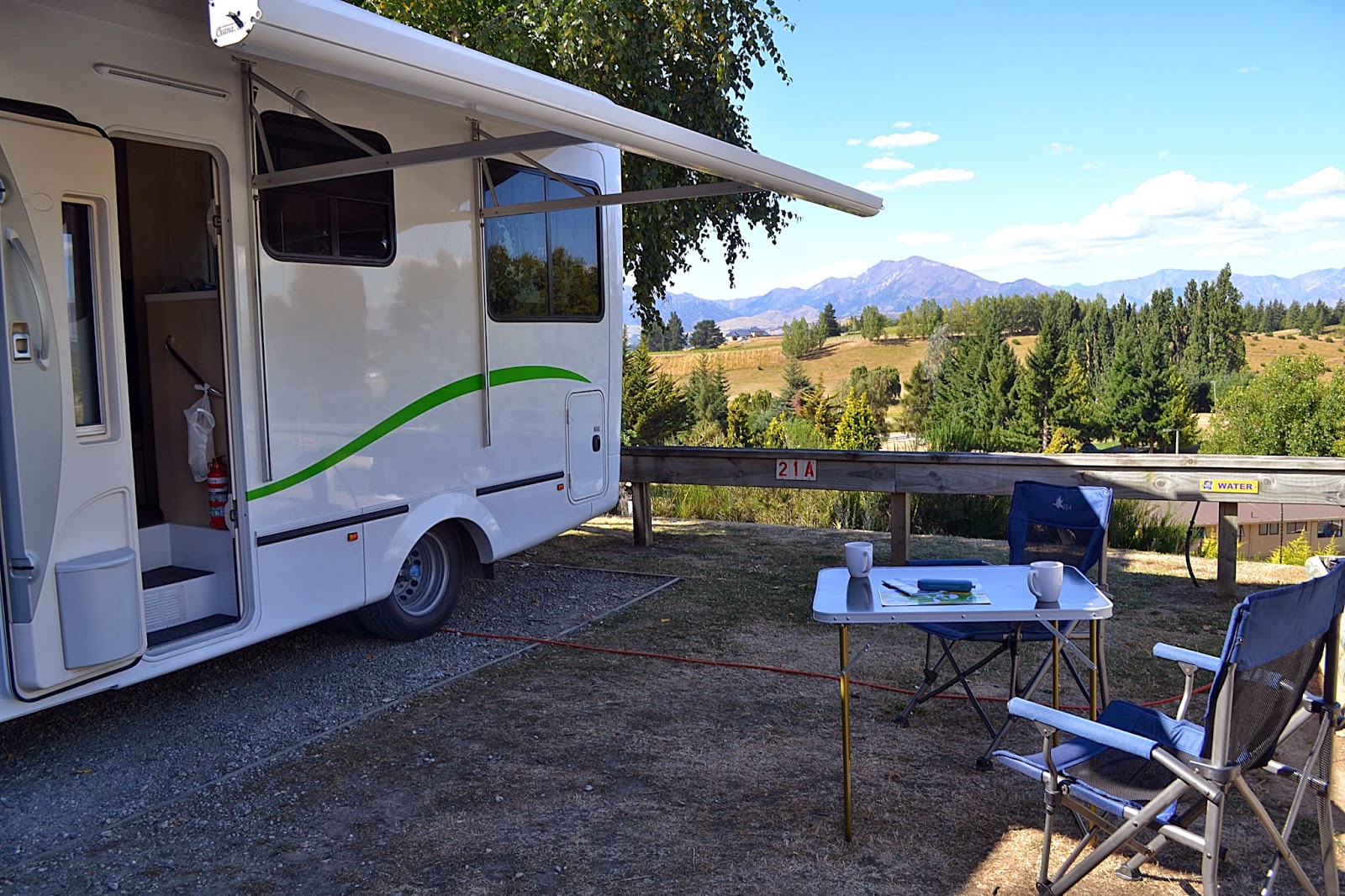
On reaching Wanaka, we were delighted to find that our hillside pitch for the night had a wonderful view across the Lake towards Mt Aspiring, which is often compared to Switzerland's Matterhorn because of its pyramidal shape.  Undoubtedly a very nice spot for our evening meal.

Wanaka Top 10 Holiday Park

Friday, 7 February 2014

FOX GLACIER - MINT!

There are two accessible glaciers to choose from and each shares its name with a village at their base.  Our drive down from Greymouth first brought us to the village of Franz Josef Glacier.  Over lunch we had our first glimpse of its namesake high above the village.


The 'thrumming' of helicopters was constant as they shuttled up and down the mountain like worker bees gathering nectar.  Sightseers would generally be landed on the ice for a few minutes whilst heli hikers would be abandoned for a few hours to explore the ice with a guide.  Apart from the general store and a few coffee shops and bars, the entire village economy is seemingly centered on scenic flights.  It was at this time that we first felt the call of the mountain!

A further 20km brought us to the village of Fox Glacier; our base camp.  On checking in we noticed that reception were selling sweets to raise funds for the local school.  Inevitably these were Fox's Glacier Mints! 


The weather was perfect but the forecast was for cloud.  If we were going to go then immediately looked like a good option.  Having secured a booking we walked up to the village to check in.  It caused some amusement as we were individually weighed and then after our safety briefing it was on to the shuttle bus for the 3 minute ride to the helipad.

The terminal building resembled a farm house and the departure gate resembled a bench in the sunshine.  We had only just sat down when our helicopter arrived and unloaded a group of heli hikers.  We were selected from the back of the group and marshalled into the front seats next to the pilot.  Our four fellow passengers shared the rear seat. Hooray; at last, an advantage for the little guy!

Our Helicopter

The flight was an awesome experience and our time on the glacier's snowfield was intoxicating.  It had us grinning and laughing like someone who had never seen snow before.  We certainly hadn't seen snow like this.  Apparently it is called neve and results from repeated freezing and thawing.  Whatever it is called, we just stumbled about in it like a pair of drunks and were both picking it up and shouting "look at this!"

Front Seat Views


Snowfield of Franz Josef


Back on Board

Bue Ice of Fox Glacier

Top of Fox Glacier

THE SEA AND OTHER PERILS

Many of the couples we have encountered are limited to just 3 or 4 weeks away from their work.  So they have to travel long and hard to get around as many of the key locations in the time available.  We are fortunate that we can go at a more relaxed pace and include additional stops to break up the longer hauls.

One such additional stop for us was Greymouth on the West Coast whereas those with less time and more stamina are likely to link directly between Glacier Country to the South with Abel Tasman Park to the far North;  a very long day’s drive.


With no headline sights at Greymouth, we decided to take a look at the historic Brunner Mine site a few kilometres up the Grey River.  The Brunner mine once worked rich seams of high quality coking coal to feed the insatiable demand for smelting silver and other ores.  With its rail link to the nearby port of Greymouth, the whole area developed rapidly.

Historic Brunner Mine

The excellent and engaging information available as we freely and exclusively wandered the site showed a very industrial landscape more typical of the UK’s Black Country in the industrial revolution.  With mining spoil dumped into the river, an array of bottle kilns for coking the coal and a brick works, it was all rather different to the tranquillity and beauty of the of the site and river today.
Grey River at Brunner Mine

The historic site is also a memorial to the 65 men who, in 1896, lost their lives in New Zealand’s greatest workplace disaster.  Many who had been enticed to leave the UK’s coalfields with the promise of a better life here but had found conditions in the valley extremely harsh.

New Zealand's Greatest Work Place Disaster

Later on we walked from our beachside site along the pebbles to Greymouth’s South Breakwater; a great viewpoint to watch the skilled surfers and also a popular spot for local anglers.  But the only fish we saw being caught were by the diving Cormorants; they seemed to manage a 100% success rate!

Surfing at Greymouth Beach

Another immaculate memorial here; this time for the men lost at sea on the Greymouth Bar, an offshore sand bar.  Most seemed to be for a local crew of two and their small fishing vessel.  Our walk continued around the harbour where there were a number of remarkably small fishing vessels being tended by their skippers; a poignant connection.

Shipwreck Memorial on South Breakwater

Fishing Boats Greymouth Harbour

We are glad we had the opportunity to explore Greymouth and learn of its history rather than just hurry past on State Highway 6.  It reminded us that beyond the gold rushes, New Zealand has a harsh industrial history that is more familiar to us.

Wednesday, 5 February 2014

WINE AND PANCAKES

Our reports have mostly featured our activities at each of the stopovers on our itinery, but some of the journeys between these have been just as memorable.

For example, on leaving the ferry at Picton and heading for Motueka, we could have taken the popular scenic route tracking the coastline at Queen Charlotte Sound; we will save that for another time. Instead we drove inland on the faster road and along the Wairau River.  This was a fascinating detour into the heart of the Marlborough wine region.  Vineyard after vineyard lining the roads seemingly endlessly.  As well as the boutique wineries, there were the massive vineyards of the big brands recognisable from the supermarkets at home.  Eventually the novelty of crying out "drunk that one" wore off!

Hope Saddle Lookout

The section of road through the gorge around 20km out of Nelson was breathtaking.  Mandy was tasked to try and capture a few shots of the route but was finding the twists and turns stomach churning even without looking through a camera viewfinder.  Wherever possible we allowed the legions of bikers to pass so they could enjoy the road fully.  We would love to be able to join them one day!

Another example was our long haul from Motueka down to Greymouth which took us through the gorge of the mighty Buller River.

Solid Granite Rock Overhanging the Road at Buller Gorge

We took the opportunity to call in at the longest swing bridge of New Zealand which came highly recommended by a couple we met on the Abel Tasman walk.  It didn't disappoint although our first encounter with the notorious kiwi sand flies left their mark.

Longest Swing Bridge in New Zealand


Further down this route we took the coast road from Westport to Greymouth so that we could look in at the Pancake Rocks and Blow Holes of Punakaiki.  What we found was an immaculately presented and thoughtfully designed walkway along the cliffs through palms and ferns with numerous viewpoints of the intriguing rock formations.  This attraction proved to be well worth the extra kilometres on our long drive and greatly exceeded our expectations.  Best viewed at high tide if you have the opportunity to time your visit.

Pancake Rocks and Blow Holes at Punakaiki


Tuesday, 4 February 2014

ABEL TASMAN NATIONAL PARK

Our chosen base in Motueka is a perfect gateway to the Abel Tasman National Park.  The park is a walkers paradise and is popular with hikers tackling the full 51km coastal track over three to five days.


For day trippers like us an alternative approach is needed to sample a section of the track.  Sea Shuttle services out of nearby Kaiteriteri Beach link with popular sections of the track.  We wanted to tackle the iconic swing bridge over the Falls River.  So after cruising up the coast to view seals and their pups on their island colony and then onto Split Apple Rock, we were dropped on the beach at Torrent Bay.

Sea Shuttle

Fur Seal and Pup

 Split Apple Rock

Our 2.5 hour walk took us through lush native bush and across the Falls River eventually arriving at the beautiful and remote beach of Medlands Bay.  Here we could relax over our packed lunch and await the sea shuttle for the trip back to the bustling beach at Kaiteriteri, which was swelled by families enjoying yet another regional anniversary public holiday.

Falls River Swing Bridge

Medlands Bay


We had opted to take the free shuttle bus to and from Motueka so we had some time to chill on the beach at Kaiteriteri.  The free shuttle turned out to be a mini tour in its own right.  Our highly entertaining driver Mark giving us an insight into the area's history including the tobacco plantations which have now been replaced by apples and hops.

Kaiteriteri Beach

We loved our taster of the Abel Tasman National Park.

Monday, 3 February 2014

MAINLAND TO MAINLAND BY SEA

Our site in Wellington was just a few kilometres from the ferry terminal but it was still an early start on Sunday morning to check in on time for our voyage on Interislander's Kaitaki.

Kaitaki

The forecast was for "southerly wind easing".  (Remember, southerly wind here is like a cold northerly in the UK!)  Well, it still seemed quite brisk as we waited in Lane 2 with all the other camper vans and motor homes destined to be last onboard.  Unless it eased quickly our hopes for a quiet crossing of the notorious Cook Strait might be dashed.  We noted that Kaitaki was registered in Portsmouth.  We correctly guessed that she had previously worked the route from Portsmouth to Cherbourg in France.  With Kaitaki meaning 'challenger' in Maori, we too were ready for the challenge ahead.

Wellington Harbour

Driven inside by the strong winds we were not tracking our progress closely but it soon became clear when we had left the shelter of Wellington Harbour.  We crossed the Strait without discomfort and were soon approaching Marlborough Sounds.  The outside decks were now popular again with everyone enjoying the calm waters, shelter from the wind and the lovely scenery as we navigated the Sounds to Picton.

 Marlborough Sounds


Picton

Our extended resident family loves to engage in great rivalry between 'Northerners and Southerners'.  Although the Cook Strait is narrower than the English Channel the rivalry here is fiercer than England versus France.  Both parties believe they have the better deal on everything including the sights and the weather.  Both parties believe they are the mainland whilst their neighbours are ancillary.  We just see one beautiful country with a wonderful scenic cruise in the middle.

Sunday, 2 February 2014

RECREATING A LOST WORLD

Zealandia is a natural reserve 2km from downtown Wellington where man has given threatened species of birds, reptiles and insects a helping hand.  It aims to showcase New Zealand’s native landscape and wildlife as it would have been before man began to introduce mammalian predators around 700 years ago.  But this is not a zoo; the only fence here is to keep predators out and if you want to spot the abundant wildlife you have to use your eyes and ears to find it.


The sanctuary has been established in a valley that was originally developed to provide Wellington’s water supply.  But as it is now known that the upper dam straddles an active earthquake fault line, the reservoir has been partially drained to avoid the possibility of a catastrophic flood down the Karori valley into Wellington city.

Upper Lake

 Lower Lake

Upper Dam

Having been purged of non-native species great care is taken to avoid breaching eco security.  Our bags were checked on entry in case we were unwittingly carrying malicious stowaway rodents! Once screened, visitors can then wander freely through the many trails in the reserve.

The beauty of the reserve is that you have to work at viewing the birds, reptiles and insects.  Whilst the various feeders are a helpful focus of activity and staff are on hand on the main trails to help you, it is rewarding to locate and identify species yourself.

Tuatara

The stars of the show are undoubtedly the Kaka, a large forest parrot, the melodic Bellbird, the Hihi or Stitchbird and Shag.  But there are many others including the fantastic Tui with its wonderful calls that always makes us smile and will be the signature tune of our tour.

Kaka

Shag

We were fortunate that our visit to Zealandia was enhanced by the opportunity to spend the day with our Wellington resident niece.  Her previous experience and knowledge of the reserve was invaluable in getting the best out of our day.  It was also great to see first-hand her professional photographic skills in action.


Now at the southern tip of the North Island, we must next voyage across the treacherous Cook Straits to reach the South Island.